
Tuesday, 17 May 2011
Natural Gas Futures in New York Fall as Mild Weather Cuts Cooling Demand
 Natural gas futures slipped in New York for the first time in four days on concern that demand for the fuel may decline after data showed U.S. industrial production unexpectedly stalled in April.
Gas dropped 3.2 percent after the Federal Reserve reported output at factories, mines and utilities was unchanged following a 0.7 percent gain in March. Industrial consumers account for 28 percent of the nation’s gas demand, according to Energy Department estimates.
“The domestic industrial production number is really weighing on the market,” said Jason Schenker, the president of Prestige Economics in Austin, Texas. “The implication is that weaker industrial output could sap some gas demand.”
Natural gas for June delivery fell 13.6 cents, or 3.2 percent, to settle at $4.182 per million British thermal units on the New York Mercantile Exchange. Prices have fallen 5.1 percent this year.
The data reflected a decline in automobile output as the Japanese earthquake and tsunami disrupted supplies, the Federal Reserve said. Economists had forecast a 0.4 percent gain in industrial production, according to the median estimate in a Bloomberg News survey.
Capacity utilization, which measures the amount of a plant that is in use, fell to 76.9 percent last month from 77 percent in March. The gauge compares with the average of 79.5 percent over the past 20 years.
Cooler Weather
Gas also slid as cool weather reduced demand for gas-fired electricity to run air conditioners. Forecasters including Commodity Weather Group LLC in Bethesda, Maryland, said temperatures will be below normal in parts of the Midwest, Southeast and Northeast through May 21.
Power plants use 30 percent of the nation’s gas supplies, according to the Energy Department.
“There is not an abundance of confidence in gas with the cool weather,” said Brad Florer, a trader at Kottke Associates Inc., an energy trading firm in Louisville, Kentucky. “We’ve been in this overall shrinking consolidation for months.”
The high temperature in Boston on May 21 may be 63 degrees Fahrenheit (17 Celsius), 5 below normal, according to AccuWeather Inc. in State College, Pennsylvania. The high in Chicago may be 73 degrees, matching the normal temperature.
Cooling demand in the Northeast may be below-normal through May 21, David Salmon, a meteorologist with Weather Derivatives in Belton, Missouri, said in a note to clients today.
Nuclear Power
U.S. nuclear-power production rose 1 percent as operators boosted reactors in Illinois, Georgia, Florida and Louisiana, the Nuclear Regulatory Commission said. Higher atomic output can reduce the demand for natural gas in power plants.
Nuclear power generation nationwide increased 776 megawatts from yesterday to 76,730 megawatts, or 76 percent of capacity, according to an NRC report today and data compiled by Bloomberg. Twenty-six of the nation’s 104 reactors were offline.
Exelon Corp. (EXC) boosted the 882-megawatt Quad Cities 2 reactor on the Illinois side of the Mississippi River to 100 percent of capacity from 85 percent yesterday. Another unit at the site, the 882-megawatt Quad Cities 1, is shut. The plant is located about 20 miles (32 kilometers) northeast of Moline.
Gas futures volume in electronic trading on the Nymex was 230,595 as of 2:40 p.m., compared with the three-month average of 307,000. Volume was 253,975 yesterday. Open interest was 955,823 contracts. The three-month average open interest is 945,000.
The exchange has a one-business-day delay in reporting open interest and full volume data.
Natural Gas Technical Analysis for May 17, 2011
The natural gas market has made another bullish candle during Monday’s trading session, and it appears that the $4-$4.20 area is going to hold yet again. The market still looks like a choppy environment with a bullish bias to it. We are buyers only, and would be interested if we can clear the Monday highs. It would take a move below $4 for us to consider selling.

(Source: http://www.commoditiesmansion.com/technical-analysis/natural-gas-technical-analysis-for-may-17-2011/)
Natural Gas Pulled Down by Data Concerns
 NEW YORK (TheStreet) -- A projected inventory jump and a downbeat industrial production report drove natural gas futures lower on Tuesday.
One of the biggest laggards among commodities, natural gas for June delivery recently was quoted off 3% to $4.188 per million British thermal units, erasing the previous day's gains, but narrowly avoiding Friday's low of $4.153.
"Futures fell to $4.16 in early trading, blowing off the carried-away buying we saw roll through yesterday's session on concerns from Friday's rig count report," a Gelber & Associates report said.
On Tuesday, the Federal Reserve said industrial production was flat in April compared with an increase of 0.7% in March. Analysts, on average, were expecting a 0.4% increase in April.
The lower-than-expected reading came as total vehicle assembly dropped, mainly because of parts shortages that resulted from the earthquake in Japan, the Federal Reserve said on Tuesday. However, it's worth noting that the lackluster report for April wasn't an isolated incident as industrial output for February was revised to a 0.3% decline. Previously it was reported to have edged up 0.1%.
The Federal Reserve also said that in April, manufacturing production fell 0.4% after rising for nine consecutive months.
"Still too early to call this one, but it's becoming a bit clearer that the continuation of manufacturing recovery sold to the public has neared its limits with the chokehold of higher commodity costs," the Gelber report said.
"This has been our message since before QE2 (the Fed's second round of quantitative easing) began last year. Industrial natural gas demand cannot easily keep growing this year as we slip into maintenance season."
The industrial sector was responsible for about 27% of all natural gas consumed in the United States last year, according to the U.S. Energy Information Administration.
Last week's mild weather is expected to yield the season's first natural gas stock injection above 80 billion cubic feet this week, the report said. However, cooling demand may increase next week as the weather gets hotter and air-conditioning usage increase - boosting natural gas demand.
Natural gas stocks were trading mixed. Kinder Morgan Energy Partners(KMP_) was falling 1.6% to $70.92, BP(BP_) was rising 0.4% to $42.63, Devon Energy(DVN_) was flat at $81.84, Newfield Exploration (NFX_) was down 0.3% at $69.54, Cheniere Energy Partners, L.P.(CQP_) was 0.8% higher at $16.98, Cheniere Energy, Inc.(LNG_) was losing 2.1% to $7.56 and EOG Resources (EOG_) was up 1% at $105.75.
Natural gas futures tumble on reduced demand outlook
 Forex Pros - Natural gas futures were down for the first time in four days on Tuesday, dropping to a two-day low amid indications of reduced demand after forecasts showed mild weather across most of the U.S. next week.
On the New York Mercantile Exchange, natural gas futures for June delivery traded at USD4.170 per million British thermal units during U.S. morning trade, plunging 3.35%.
It earlier dropped by as much as 3.5% to USD4.162 per million British thermal units, the lowest price since May 13.
The Commodity Weather Group said that normal to below-normal temperatures were expected in the U.S. east and southeast through May 21, followed by a shift to above-normal temperatures in the eastern half of the country in the 6-10 day forecast.
Weather service provider AccuWeather said that Boston was expected to have a high of 63 degrees Fahrenheit (17 Celsius) on May 21, five degrees below normal. The high in Chicago may be 73 degrees, matching the normal temperature.
Gas use typically hits a seasonal low with spring's mild temperatures, before warmer weather increases demand for gas-fired electricity generation to power air conditioning.
Meanwhile, a government report showing that industrial production in the U.S. was unexpectedly flat in April weighed on prices. Analysts had expected U.S. industrial production to rise by 0.5% last month after rising by a revised 0.7% in March.
Industrial consumers account for 28% of U.S. gas demand, according to the U.S. Energy Department.
Elsewhere, light sweet crude oil futures for delivery in June slumped 0.85% to trade at USD96.19 a barrel, while heating oil for June delivery shed 0.52% to trade at USD2.847 per gallon during U.S. morning trade.
Read more: http://community.nasdaq.com/News/2011-05/natural-gas-futures-tumble-on-reduced-demand-outlook.aspx?storyid=76271#ixzz1MfAMkCVP
Natural gas drilling moving closer to Delaware River basin
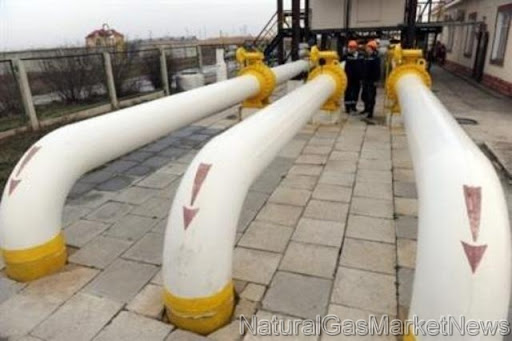 By Sandy Bauers
Inquirer Staff Writer
Although the Delaware River has a moratorium on natural gas drilling until rules are in place, companies are already lining up.
The commission overseeing the river has granted one request for withdrawal of water for natural gas activities, and two more are being evaluated. Yet a fourth was up for a vote last week before it was tabled because of the large flurry of public comments.
Even though the approvals aren't sufficient to allow companies to start drilling now, critics say that any consideration by the Delaware River Basin Commission is premature.
The commissioners say that they anticipate so much work, they simply need to start.
Either way, it signals that natural gas exploration - a common sight in central and Western Pennsylvania - is moving ever closer to the Delaware basin and its river, which provides drinking water for 15 million people, including Philadelphia and many of its suburbs.
"It looks more and more inevitable that there is going to be drilling in the basin," said John Quigley, former secretary of Pennsylvania's Department of Conservation and Natural Resources, now an environmental consultant. "The question is under what rules?"
Even with DRBC permission, the water cannot be taken and used until the commission finishes its rules and more permits are issued.
But getting water withdrawals now will undoubtedly speed things along once regulations are adopted, said Ross H. Pifer, a professor at Pennsylvania State University's Dickinson School of Law. "It just removes one potential hurdle. There are a number of approvals companies are going to need to drill, and this removes one of those from their to-do list."
The proposed DRBC rules, which are generally stricter than Pennsylvania's regulations, were first presented in December. A public-comment period ended April 15.
Originally, staffers estimated final approval would not come until September, at the earliest. But commission Executive Director Carol R. Collier said last week that the agency had received 58,000 submissions, which have to be sorted and responded to.
After that, the commission will decide whether to alter the proposed regulations in response.
The five commission members include the governors of the four states with land in the basin - Pennsylvania, New York, New Jersey, and Delaware - and a federal representative.
Formed 50 years ago, before many major environmental regulations were in place, the commission has broader powers than the Susquehanna River Basin Commission, which regulates only water withdrawals, and the Ohio River basin, which has no commission.
Also, the Delaware basin has waters clean enough to warrant a federal "special protection" designation, which prompts tighter regulatory scrutiny.
The request before the commission Wednesday was from XTO Energy Inc., a subsidiary of Exxon Mobil Corp.
XTO wants to withdraw up to 250,000 gallons of water a day from a tributary of the Delaware River, Oquaga Creek in Broome County, N.Y., to support natural gas exploration and production.
A company spokesman noted that the application was made a year ago. He said the company had drilling activity in 14 states, including Pennsylvania, but that this was its first venture into the Delaware River basin.
New York also has a moratorium on drilling.
As is it done today, drilling for natural gas is a water-intensive activity. For each well, several million gallons of water are mixed with other chemicals and injected into the ground under high pressure to free the gas.
At an impassioned two-hour hearing last week, critics told the commission it was acting prematurely. "Please, what is the hurry?" said Julie Edgar, who said she was a "concerned citizen" from the Lehigh Valley.
Others said DRBC's consideration of water withdrawals smacked of a backroom agreement with the industry.
Since New York state and the DRBC have not yet authorized hydrofracking, "then what is the message that is being communicated with this withdrawal docket?" asked Edie Kantrowitz, who identified herself as a concerned citizen from New York City. "Is it a done deal?"
Penn State's Pifer doubts it. "As you look at the various governmental agencies that have acted in Pennsylvania, I think it would be a real stretch to consider the approach of the DRBC as pro-drilling," he said.
Many critics have called for the commission to halt all regulatory activity until a cumulative environmental-impact study can be done.
For that, the commission needed a congressional appropriation. U.S. Rep. Maurice Hinchey (D., N.Y.) and others got committee approval for $1 million for the study, but the measure later failed.
A Hinchey spokesman said the commission should not give any approvals before the study was done.
But the commission's federal representative, Brig. Gen. Peter A. DeLuca of the Army Corps of Engineers, said at the hearing Wednesday that it was time to move ahead.
He said that the commission didn't want to get caught in a Catch-22 situation, "where we wait for a study that there is no funding for."
DeLuca said that considering water withdrawals now was prudent. "When the regulations are done, there's going to be a big blast of a workload," he said. "We know the commission staff is not going to grow in size. If we can address a piece of the workload now, we're OK with that."
Only two people at the hearing testified for the proposal.
Dewey Decker, a supervisor in Sanford, N.Y., which is near the creek, said the local economy was depressed and needed an economic boost from natural gas drilling.
Rick Williams, a Sanford resident, said landowners in the area "overwhelmingly support XTO's application."
"We're a dying town," he said. "We all welcome this as a positive step . . . to secure our future."
The area of the proposed withdrawal is about four hours north of Trenton, where the commission is based and where last week's meeting was held.
Many complained that the notice had gone out two weeks earlier and few could take the day off.
Ultimately, the commission decided not to vote on the matter because of the volume of public comment - more than three dozen testified. Before the meeting, the commission received 70 to 100 e-mails, as well as 100 printed comments, and more were handed in at the meeting.
By a unanimous vote, the commission decided to extend the public-comment period for 30 days and hold a hearing closer to the site.
The XTO spokesman said later that the company understood "the DRBC's position and interest in providing the public more time to review and comment on our permit request" and that it "looks forward to the DRBC resuming consideration of our water-withdrawal application."
While some at the hearing had brought up the Exxon Valdez oil spill and said the company had not responded adequately, the spokesman said that "XTO has a proud history of safe operations."
In July, the commission approved a Stone Energy request to withdraw 700,000 gallons a day from the West Branch Lackawaxen River in Mount Pleasant Township, Wayne County.
The commission conducted a public hearing for that request and another for a natural gas production well at the site, and received 1,700 comments.
Commission scientists are evaluating two more requests.
One is from F.E. Kamp Inc. for a withdrawal of up to 5.6 million gallons during a 30-day period from a well next to the West Branch of the Delaware River in Deposit, N.Y.
The other is from the town of Deposit, which wants to continue current water withdrawals but get permission to provide up to 200,000 gallons of water a day to the natural gas industry.
The applicant indicated it had one request from Newfield Appalachia PA, L.L.C. to buy up to 200,000 gallons per day for drilling and fracturing activities in Wayne County.
US GAS: Natural Gas Extends Losses On Weak Manufacturing Data
By Dan Strumpf
   Of DOW JONES NEWSWIRES
 By Dan Strumpf
 NEW YORK (Dow Jones)--Natural-gas futures fell sharply Tuesday, extending earlier losses after a report showed U.S. manufacturing production fell for the first time in 10 months.
Natural gas for June delivery recently traded down 1.31 cents, or 3%, to $4.187 a million British thermal units on the New York Mercantile Exchange.
The manufacturing sector accounts for one-third of U.S. natural-gas demand, and any signs of a slowdown tends to pull the price lower.
The Federal Reserve said industries used 76.9% of their capacity last month, down 0.1 percentage point from the revised 77% March figure. Manufacturing capacity utilization dropped 0.4 percentage point to 74.4%.
Economists surveyed by Dow Jones Newswires had forecast a 0.3% increase in output and a capacity utilization rate of 77.6%.
"That report has quite logically engendered some negative price action in the natural-gas market," said Jason Schenker, president of Prestige Economics in Austin, Texas.
Natural-gas prices had started the day lower, reversing much of Monday's gains as market participants awaited a clearer picture of weather-driven demand this summer. Forecasts continue to call for below-normal temperatures for most of the next five days--little-changed from Monday--followed by a return to above-normal temperatures in the central and eastern U.S., according to Tradition Energy.
"We are going to see a return of some hot weather, but not strongly enough to generate elevated cooling use, so we're stuck in the middle of this range," said Gene McGillian, broker at the Stamford, Conn., firm.
Natural-gas futures have wobbled between $4 and $4.35 a million British thermal units since May 5, when a sell-off across the commodities market sent the contract tumbling from highs above $4.70. Since then, the market has seen an exodus of speculative traders, keeping prices under pressure, McGillian said.
Traders will also be awaiting further cues from Thursday's report on U.S. gas inventories, which stand at 2% below the five-year average and 12% less than 2010 levels.
Supplies, however, are expected to grow strongly in the coming weeks. The U.S. Energy Information Administration said last week it expects working gas inventories to build "strongly" during summer and approach record highs in the second half of 2011.
"With weather-related demand representing a non-event for a few more weeks, we still see sideways trade into early June," said Jim Ritterbusch, head of the trading advisory firm Ritterbusch & Associates in Galena, Ill.
(Source: http://online.wsj.com/article/BT-CO-20110517-711749.html)
Mexico Stepping Up Natural Gas Imports as Pemex Focuses on Oil Production
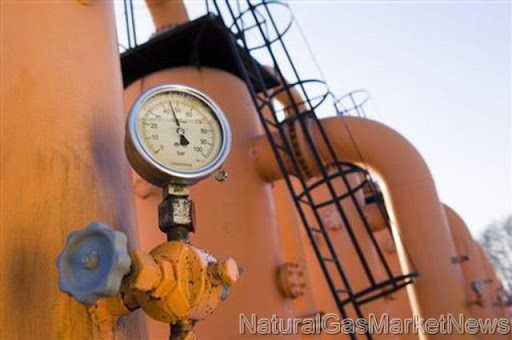 Mexico, which is building about six new power plants this year, is likely to step up natural-gas imports because slumping prices for the fuel are deterring state-owned Petroleos Mexicanos from developing its own fields.
Domestic supply isn’t sufficient to cover the needs of Comision Federal de Electricidad, the country’s state power company, Sergio Alcocer, Mexico’s deputy energy minister, said yesterday in an interview in La Jolla, California. Pemex isn’t planning to exploit as much as 1 trillion cubic feet of gas reserves it recently found to focus on oil output, he said.
“We anticipate that the country will keep importing more gas as long as it’s cheaper than producing it,” Alcocer said. “Pemex maximizes its profit when it produces and exports crude oil, and as a company, that’s where its interests lean.”
CFE, as the utility is known, is expected to start the construction this year of “about a half-dozen” power generation plants using fossil fuels, Alcocer said. Increased demand for gas may boost sales from U.S. companies, such as Apache Corp. and Cheniere Energy Inc., which are building liquefied natural gas export terminals betting they can find more foreign buyers.
Pemex, as Latin America’s largest oil producer is known, has primarily found gas in nine deep-water wells it successfully explored since 2004. The Mexico City-based company hasn’t developed plans to exploit the deposits that could boost gas reserves by almost 1 trillion cubic feet.
Balanced Market
Proved reserves are those that have a reasonable certainty of being recoverable under existing economic and political conditions with current technology.
“The ministry has been in talks with CFE and Pemex seeking a balance for the gas market,” said Alcocer, who was named deputy minister on April 6.
On March 23, Pemex said it found enough shale gas in the northern state of Coahuila to estimate that the region has the potential to produce 300 million cubic feet a day of shale gas and 40,000 barrels of oil a day. Plans to develop those fields will depend on the U.S. gas futures market, Carlos Morales, Pemex’s head of production and exploration, said last month.
Natural-gas futures traded in New York averaged $4.20 per million British thermal units during the first quarter, a 16 percent decline from a year earlier, as new wells from Wyoming to Pennsylvania created excess supply in the North American market. Natural gas for June delivery dropped 13 cents, or 2.9 percent, to $4.191 per million British thermal units at 12:57 p.m. on the New York Mercantile Exchange.
U.S. Shale Growth
U.S. shale gas production increased by an average of 48 percent a year from 2006 to 2010, according to the Energy Department in Washington. Output will rise almost threefold from 2009 to 2035, the department predicted in its Annual Energy Outlook release on April 26.
Last year, the U.S. Energy Department approved a natural- gas terminal in Louisiana, operated by Cheniere, to export LNG to countries with U.S. free trade agreements.
Tuesday, 10 May 2011
Natural Gas Futures Rise in New York on Hot Weather Forecast in U.S. South
 Natural gas futures rose, snapping a six-day losing streak, as forecasts showed hotter-than-normal weather in the U.S. South, boosting demand for the power-plant fuel for air conditioning.
Gas gained 2.2 percent as forecasters including MDA EarthSat Weather in Gaithersburg, Maryland, said temperatures will be as much as 14 degrees Fahrenheit above normal in the South and Midwest this week. Gas tumbled 12 percent in the previous six days on concern economic growth will slow, crimping fuel use.
“It’s very hot in the southern U.S. so there will be more air-conditioning demand,” said Peter Linder, president of the DeltaOne Energy Fund in Calgary. “The correction was overdone and traders are getting back in.”
Natural gas for June delivery rose 9.2 cents to settle at $4.246 per million British thermal units on the New York Mercantile Exchange. Prices are up 1.8 percent from a year ago.
“At $4.20 gas is cheap,” Linder said. “Prices may get back to the $4.40-to-$4.50 range.”
U.S. gas stockpiles rose 72 billion cubic feet in the week ended April 29 to 1.757 trillion cubic feet, 1 percent below the five-year average level, the Energy Department reported last week. Storage levels were down 11 percent from a year earlier.
Houston will have a high of 89 degrees Fahrenheit (32 Celsius) today, 5 degrees above normal, according to AccuWeather Inc. in State College, Pennsylvania. Jacksonville, Florida, will have a high of 87 degrees.
Weather and Prices
“We’ve had six days of declines so any sign of hot weather could raise prices,” said James Williams, an economist at WTRG Economics, an energy research firm in London, Arkansas. “Storage is below the five-year average, which means we may have reached the balance between supply and demand.”
Scheduled gas deliveries to U.S. power plants rose 2.6 percent to 15.1 million dekatherms (14.7 billion cubic feet), according to a sampling of gas pipeline nominations compiled by Bloomberg. Scheduled shipments to Florida for electricity generation rose 4.2 percent to 3.29 million dekatherms.
Power plants use 30 percent of the nation’s gas supplies according to the Energy Department.
Output Estimate
U.S. gas production in 2011 will average 63.23 billion cubic feet a day, down from 63.32 billion estimated in April, the Energy Department said in its monthly Short-Term Energy Outlook.
Gas prices at the Henry Hub in Erath, Louisiana, will average $4.24 per million Btu this year, up from $4.10 estimated in April.
Gas production will have month-to-month declines “through the year because of reductions in the number of active natural gas drilling rigs,” the department said in the report.
U.S. gas rigs gained 8 to 890 last week, according to Houston-based Baker Hughes Inc. The rig count is 6.6 percent lower than a year ago.
Gas futures volume in electronic trading on the Nymex was 231,986 as of 2:39 p.m., compared with the three-month average of 316,000. Volume was 309,561 yesterday. Open interest was 977,380 contracts. The three-month average open interest is 943,000.
U.S. gas: Futures bounce back from three-week low
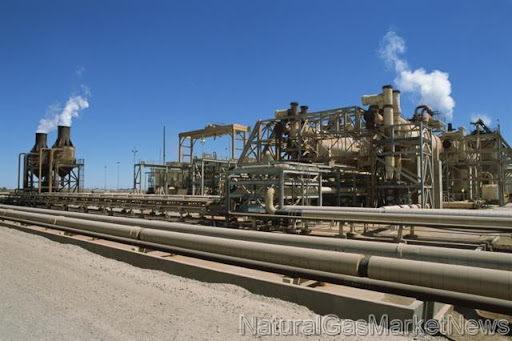 Natural gas futures bounced back Tuesday from the three-week low reached Monday on bargain buying and a general upswing in energy futures.
Natural gas for June delivery settled up 9.2 cents, or 2.21%, at $4.246 a million British thermal units on the New York Mercantile Exchange. The benchmark contract ended Monday at its lowest levels since April 18 after a six-session skid.
The rebound rode rises in other commodities, including crude and heating oil, said Jay Levine, president of Enerjay LLC. in Portland, Maine. "Needless to say, the fundamentals have not changed meaningfully from yesterday to today to warrant a 9-cent increase," he said.
Last month lingering demand for heating fuel in northern markets, an early Southern heat wave that prompted an uptick in power demand for air conditioners, and spring maintenance outages at nuclear power plants pushed prices higher.
But recently, with weather moderating in much of the country and nuclear plants coming back on line, demand for natural gas has waned, pressuring prices lower.
Eventually prices fell far enough to attract bargain hunters, who should continue to buy into the market in the coming weeks, said Fain Shaffer, president of Infinity Trading Group in Medford, Ore.
"Between now and the middle of June I think we'll see speculators come in and do some bargain hunting ahead of hurricane season," he said.
Tropical weather is tracked by traders because of the disruptions hurricanes can cause to Gulf of Mexico production.
Though with so much of U.S. production coming now from shale formations buried deeply onshore, it's unclear what sort of dent an offshore disruption would make in U.S. supplies, Shaffer said.
The Energy Information Administration on Tuesday said that although gas in storage sits nearly 13% below last year's levels, it expects high production and summer weather more mild than last year's to push inventories toward an all-time high of 3.9 trillion cubic feet by the end of October.
Domestic supplies reached a record high of 3.84 trillion cubic feet last November.
The supply glut has stoked interest in exporting liquefied natural gas. U.S. regulators have before them three requests to export domestically produced natural gas from owners of liquefied natural gas import facilities.
Most recently, Southern Union Company (SUG) said Monday that is has, along with partner BG Group PLC (BG.LN), asked regulators for permission to export 2 billion cubic feet per day from an existing liquefied natural gas import facility in Lake Charles, La., over a 25-year period.
U.S. Reduces 2011 Natural Gas Output Forecast by 0.1%
 The U.S. lowered its forecast for natural gas output in 2011 by 0.1 percent and raised its outlook for prices.
Marketed gas production will average 63.23 billion cubic feet a day in 2011, down from 63.32 billion estimated in April, the Energy Department said in its monthly Short-Term Energy Outlook, released today in Washington. The estimate is up 2.3 percent from 61.83 billion produced in 2010.
Production in the Gulf of Mexico will average 5.56 billion cubic feet a day, down from 5.62 billion estimated last month, according to the report from the department’s Energy Information Administration. Lower-48-state output is pegged at 56.63 billion, down from 56.65 billion.
The government agency said it expects production to “begin modest month-to-month declines that could continue through the year because of reductions in the number of active natural gas drilling rigs.”
Total gas consumption will average 66.48 billion cubic feet a day, down from 66.75 billion estimated in April.
Gas prices at the benchmark Henry Hub in Erath, Louisiana, will average $4.37 per million British thermal units, up from the previous estimate of $4.10, according to the department.
“The decline in drilling activity this year and forecast increase in consumption next year contribute to higher natural gas prices next year and a turnabout in drilling activity during 2012,” the report said.
LNG imports will average 940 million cubic feet a day this year, down from 1.05 billion forecast in April.
Demand for gas from power plants will average 20.29 billion cubic feet a day this year, up from the previous estimate of 20.28 billion. Industrial demand will average 18.43 billion, compared with 18.73 billion predicted last month.
Natural gas for June delivery rose 2.8 cents, or 0.7 percent, to $4.182 per million Btu at 12:30 p.m. on the New York Mercantile Exchange. Prices have declined 5 percent this year.
(Source: http://www.bloomberg.com/news/2011-05-10/u-s-reduces-2011-natural-gas-output-forecast-by-0-1-1-.html)
Russian Natural-Gas Transit Via Ukraine Increased 18% in April
 Ukraine shipped 18 percent more Russian natural-gas in April than the same month a year earlier, said the state-run pipeline operator DP Ukrtransgaz.
Ukraine carried 9.9 billion cubic meters of gas from Russia in April, Ukrtransgaz said today in e-mailed statement. Supplies of gas to European countries increased by almost 19 percent to 9.7 billion cubic meters, it said.
Saturday, 7 May 2011
Natural Gas Has Biggest Weekly Drop Since August on Concern Demand to Fall
 Natural gas futures posted their biggest weekly drop in more than eight months on the outlook for demand, as stockpiles rose more than expected and commodities tumbled on speculation that economic growth will slow.
Gas dropped 9.9 percent this week, the most since the five- days ended Aug. 27, after the Energy Department said inventories increased by 72 billion cubic feet last week, above the 67 billion analysts estimated. Commodities slid the most in 31 months yesterday and extended declines today.
“The meltdown in commodities drove a bit of a selloff for gas,” said Gordy Elliott, a risk-management specialist at FC Stone LLC in St. Louis Park, Minnesota. “The gas industry seems quite confident about its ability to keep production levels up.”
Natural gas for June delivery fell 2.6 cents, or 0.6 percent, to settle at $4.235 per million British thermal units on the New York Mercantile Exchange. The futures have dropped 3.9 percent this year.
Gas stockpiles rose to 1.757 trillion cubic feet in the week ended April 29, the Energy Department reported yesterday. Storage injections for the previous two weeks had fallen short of analysts’ predictions as compiled by Bloomberg. Inventories were 1 percent below the five-year average.
“We haven’t been very far on either side of the five-year average storage level” for the past few weeks, said Tim Evans, an energy analyst with Citi Futures Perspective in New York.
Commodity Markets
Commodities tumbled yesterday as the dollar climbed against the euro after European Central Bank President Jean-Claude Trichet said inflation risks will be watched “very closely,” signaling the ECB may wait until after June to raise rates.
A strengthening dollar makes commodities priced in the currency less attractive for investors.
Crude oil for June delivery tumbled $2.62, or 2.6 percent, to $97.18 a barrel in New York, the lowest settlement price since Feb. 28 and capping the biggest weekly decline since December 2008.
The Standard & Poor’s GSCI Index of commodities fell 6.5 percent yesterday, the most since Jan. 7, 2009, and lost 0.9 percent today.
The U.S. jobless rate climbed to 9 percent, the first increase since November, the Labor Department said today in Washington. Applications for jobless benefits gained 43,000 to 474,000 in the week ended April 30, the most since August, department figures showed yesterday.
The measure of employee output per hour increased at a 1.6 percent annual rate after a 2.9 percent gain the prior three months, according to the department.
Mild Weather
Mostly normal temperatures are likely in the eastern and central U.S. from May 11 through May 15, according to Commodity Weather Group in Bethesda, Maryland. The mild weather may reduce the demand for gas for heating and cooling.
The high temperature in New York on May 12 may be 69 degrees Fahrenheit (21 Celsius), 1 degree below normal, according to AccuWeather Inc. in State College, Pennsylvania.
Power plants use 30 percent of the nation’s gas supplies, according to the Energy Department.
Gas futures volume in electronic trading on the Nymex was 306,293 as of 3:20 p.m., compared with the three-month average of 324,000. Volume was 476,447 yesterday. Open interest was 998,631 contracts, down from a record a day earlier. The three- month average open interest is 939,000.
The exchange has a one-business-day delay in reporting open interest and full volume data.
Canadian Natural Gas Declines as Mild U.S. Weather Pares Demand
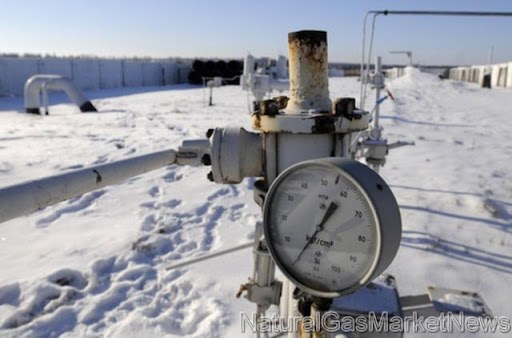 Canadian natural gas fell as mild U.S. weather pared demand and additions to stored reserves of the fuel exceeded analyst expectations.
Temperatures in Chicago may reach 70 degrees Fahrenheit (21 Celsius) May 9, 1 degree above normal, according to State College, Pennsylvania-based AccuWeather Inc. U.S. gas stockpiles rose 72 billion cubic feet last week to 1.76 trillion, compared with analysts’ expectations of 67 billion cubic feet, the average of estimates compiled by Bloomberg.
“We expect North American gas to be oversupplied for the next two to seven years,” Steve Laut, president of Canadian Natural Resources Ltd., said yesterday. Canada’s second-largest gas producer will increase spending on more profitable oil and natural gas liquids this year, he said at the company’s annual meeting in Calgary yesterday.
Alberta gas for June delivery fell 3.75 cents to C$3.4925 per gigajoule ($3.42 per million British thermal units) as of 2:05 p.m. New York time, according to NGX, a Canadian Internet market. Gas traded on the exchange goes to users in Canada and the U.S. and is priced on TransCanada Corp.’s Alberta system.
Natural gas for June delivery on the New York Mercantile Exchange fell 2.5 cents to $4.236 per million Btu as of 2:24 p.m.
Gas for prompt delivery fell as mild weather forecast in the U.S. next week is likely to pare air-conditioner use.
Delivery Point Prices
Gas at the Alliance Pipeline delivery point near Chicago dropped 30.49 cents, or 6.6 percent, to $4.2098 per million British thermal units on the Intercontinental Exchange. Alliance is an express line that can carry 1.5 billion cubic feet a day to the Midwest from western Canada.
At the Kingsgate point on the border of Idaho and British Columbia, gas fell 25.13 cents, or 5.9 percent, to $4.008, according to ICE. At Malin, Oregon, where Canadian gas is traded for California markets, gas was down 29.34 cents, or 6.7 percent, to $4.1193.
Volume on TransCanada’s Alberta system, which collects the output of most of the nation’s gas wells, was 15.1 billion cubic feet as of 2 p.m. in New York, 334 million below its target level. Gas production has declined in western Canada because the ground is too soft to move heavy equipment to well sites.
Gas was flowing at a daily rate of 2.58 billion cubic feet at Empress, Alberta, where the fuel is transferred to TransCanada’s main line.
At McNeil, Saskatchewan, where gas is transferred to the Northern Border Pipeline for shipment to the Chicago area, the daily flow rate was 1.88 billion cubic feet.
Available capacity on TransCanada’s British Columbia system at Kingsgate was 1.28 billion cubic feet. The system was forecast to carry 1.62 billion cubic feet today, about 56 percent of its capacity of 2.9 billion.
The volume on Spectra Energy’s British Columbia system, which gathers the fuel in northeastern British Columbia for delivery to Vancouver and the Pacific Northwest, totaled 2.96 billion cubic feet at 1:05 p.m.
Thursday, 5 May 2011
Gold May Drop as Investors Sell on Rise to Record, Survey Shows
 Gold may decline as some investors sell after the metal’s rally to a record and as other commodities drop, a survey found.
Eight of 18 traders, investors and analysts surveyed by Bloomberg, or 44 percent, said bullion will fall next week. Seven predicted higher prices and three were neutral. Gold for June delivery was down 4.5 percent for this week at $1,485.70 an ounce by 11:30 a.m. yesterday on the Comex in New York. It reached a record $1,577.40 on May 2.
Bullion gained for six consecutive weeks as it advanced to a record on demand for a hedge against rising inflation and an alternative to a weakening dollar. Gold prices slipped this week as silver plunged after Comex owner CME Group Ltd. raised margin requirements and as industrial metals and crude oil declined.
“This market has risen too far, too fast,” said Jim Pogoda, an investor in Summit, New Jersey, and a former precious-metals trader for Mitsubishi International Corp. “I think we’ll get a more significant pullback over the next few weeks, as I expect many speculative longs that contributed to the frenzy to exit.”
The attached chart tracks the results of the Bloomberg survey, with the red bars derived by subtracting bearish forecasts from bullish estimates. Readings below zero signal that most respondents expect a decline. The green line shows the gold price. The data are as of April 29.
The weekly gold survey, that started almost seven years ago, has forecast prices accurately in 208 of 361 weeks, or 58 percent of the time.
This week’s survey results: Bullish; 7 Bearish; 8 Neutral: 3.
Gold Price Dips Below $1,500, Silver Plunge Continues
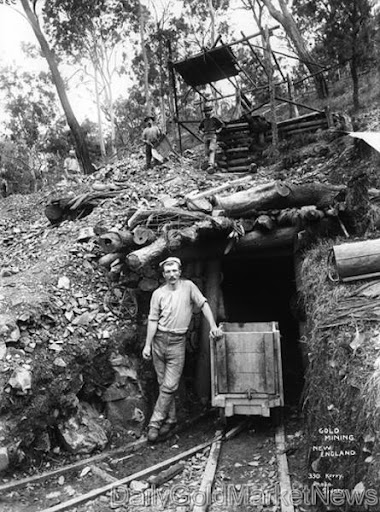 GOLD PRICE NEWS – The gold price moved lower Thursday morning, declining $10.00 to $1,509 per ounce. The gold price moved lower overnight, falling below $1,500 to a low of $1,496.25 amid broad-based liquidation in stock and commodity markets. Silver remains immersed in a violent correction, dropping another 3.1% to $38.10 per ounce after touching a low of $37.36 earlier this morning. Silver prices have crashed 21% this week while the gold price has lost 3.5%.
The share prices of gold and silver mining companies moved lower, led by declines in Barrick Gold (ABX) and Goldcorp (GG), which sank 2% and 1%, respectively. Barrick, the worlds’ largest gold producer has dropped 7.5% over the past eight trading days on the back of soft gold prices and a takeover bid for copper company, Equinox Minerals that has been ill-received by the market.
Gold prices showed a muted reaction to news early Thursday that applications for jobless benefits rose 43,000 to 474,000 last week, considerably worse than the 400,000 to 420,000 consensus among economists. The bleak outlook on the employment front should keep Bernanke and the Fed in the dovish camp on monetary policy, lending support for the gold price.
Wednesday saw the gold price continue to retreat, as the yellow metal fell to as low as $1,505 before paring its losses and closing near $1,515 per ounce. Silver tumbled alongside the gold price, briefly dropping below $39 before finishing down by $2.44, or 5.9%, at $39.19 per ounce.
The sell-off in the gold price on Wednesday was fueled by a Wall Street Journal report that several large investors – including George Soros and John Burbank – liquidated a considerable portion of their gold and silver holdings. The story noted that Soros Fund Management purchased gold and silver over the past two years to protect against the Federal Reserve’s response to the risks of deflation. However, Soros now believes that deflationary risks have dissipated significantly, making the rationale for holding positions tied to the gold price less attractive.
Burbank, founder of hedge fund Passport Capital, reduced the size of his gold positions in order to lock in profits, according to an individual close to the firm. However, the source noted that Burbank remains bullish on the gold price over the longer-term, but feels that the price of gold is due for a meaningful correction at this time.
Late Wednesday afternoon, a report surfaced that legendary investor and billionaire Carlos Slim, the world’s wealthiest individual, has been actively selling silver futures contracts 2-3 years out. Silver prices moved lower yet again this morning on the heels of the news and on liquidation of speculative net long positions on the COMEX.
Returning to gold, in contrast to the views of George Soros, another prominent investor reiterated his bullish forecast on the yellow metal. John Paulson – who with $36 billion under management at Paulson & Co. runs the world’s third-largest hedge fund – told investors this week that the price of gold could reach $4,000 per ounce.
Paulson’s bullish prediction on the gold price echoed positive comments he recently made to France’s Les Echos. There, the hedge fund magnate stated that “In these times of uncertainty for paper based currency, I feel more secure in holding gold; [it] offers good protection against the paper currencies devaluation and even the possibility of generating a return on fixed investment.”
Paulson went on to discuss the Federal Reserve’s quantitative easing programs, contending that “It is undeniable that this monetary expansion is equivalent to running the printing press.” He later stated that “gold has always been a safe haven against inflation and a safe haven in times of political instability.”
As a result, Paulson forecasted that inflation will reach double digits in the next three to five years, and investors will continue to seek out investments tied to the gold price in order to protect against these inflationary risks.
(Source: http://www.goldalert.com/gold-price-dips-below-1500-silver-plunge-continues/)


